|
New York, New York NEIGHBORHOODS Author: Barbara Hayo www.TrustedTours.com |


Beginning at the southern tip, New York City is divided into Downtown, Midtown and Uptown. Within each of these areas are distinct neighborhoods, each with unique sights and sensations: Downtown is the most ethnic and colorful; Midtown thrives with commerce and key sites associated with the city; Uptown is more residential, green and posh. The best and most efficient way to experience the city in full flavor is to see it by neighborhood. Get there by subway, cab or bus. Spend a day, or part of a day walking the neighborhood - take in the sights, stop for lunch, enjoy dinner and the nightlife.
DOWNTOWN:
LOWER MANHATTAN – Financial District - Battery Park - South Street Seaport- 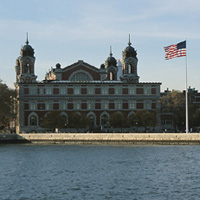
The southern tip of the island offers wonderful waterfront views and a rich history, past and present. The Dutch chose this location for their settlement in 1625, it was the nation’s first capital, and George Washington was sworn in here as president in 1789, an event highlighted in the Federal Hall National Memorial. The city’s maritime history is told in museums, on historic tall ships, in stores, and restaurants on the piers of South Street Seaport. Ferries to Ellis Islandand the Statue of Liberty take off from the piers at Battery Park. A Liberty Helicopter Tour, taking off from the heliport at Pier 6 provides a great aerial view, or see it all from the water on one of many harbors tour departing from area piers.
There’s a lot to see on foot. Walk the promenade in Battery Park City along the Hudson River, a virtual outdoor museum of works by contemporary artists with great views of the Statue of Liberty. Pause to reflect at Ground Zero, forever seared in America’s psyche. Experience the 20 th century Jewish experience in the powerful Museum of Jewish Heritage. Marvel at the engineering feats of New York’s signature buildings in the Skyscraper Museum in the Ritz-Carleton Battery Park Hotel. Have a fabulous lunch with a view at Gigino Wagner Park or at Battery Gardens. Dine in a colonial setting in Fraunces Tavern, the 1719 building where George Washington bade farewell to his troops, or the in 1794 Bridge Café, quaint in a city of skyscrapers.
In the Financial District, the pulse of America’s financial health is taken every weekday in the New York Stock Exchange, and a large portion of the world’s gold reserve is stored 50 ft. below sea level in the Federal Reserve Bank. Check out the lobby of the Cunard Building for a glimpse the grand days of the great ocean liners. Experience a concert in the Gothic Trinity Church, rising incongruously among the grey façades of Wall Street. Admire the wonderful architecture around beautiful City Hall, the seat of city government since 1812 – St. Paul’s Chapel, Manhattan’s oldest church, built in 1766, and the architecturally ornate Municipal Building, Woolworth Building and AT&T Building, all reflecting the grand, gilded era of the early 1900s.
TRIBECA & SOHO – Tribeca, (triangle below Canal Street) is one of the city’s hippest residential neighborhoods. Cast-iron warehouses converted into residential apartments, create a picturesque streetscape. Art galleries, antiques stores, boutiques, trendy bars, and some of the city’s best restaurants also reside in these interesting structures. The Tribeca Film Center brings out the stars, as does the glamorous TriBeCa Grand Hotel. Rub elbows with the film famous at the TriBeCa Grill or at Nobu. For a real change of pace, walk past the stately row of Federal-style, late 1700 townhouses lining Harrison Street. Still trendy Soho (south of Houston) lost some of its luster as the “in” place to Tribeca, but the cast iron buildings converted into fabulous lofts still house galleries, gorgeous designer clothing stores, including the super-modern Prada, and restaurants, some with the delightful feel of Paris bistros.
CHINATOWN – Crowded and growing, Chinatown is all color, activity, sounds, smells and tastes - a true immigrant enclave. Imagine the life of a Chinese immigrant in the fascinating Museum of Chinese in the Americas. Walk down Mott Street where everything from fine silks, tubs of sea creatures, and curative herbs spill out of small Chinese shops; stop by the Pearl River Chinese Products Emporium, for everything imaginable. Take a break from the bustle and noise in the candlelit, incense-infused Eastern States Buddhist Temple. Sample Asian food in over 200 restaurants; try a lychee or ginger-flavored treat from Chinatown Ice Cream Factory
LITTLE ITALY – As the families of 19th century immigrant Italians moved on, the more newly arrived Chinese have encroached upon Little Italy, a frequently occurring New York dynamic. Italian influences, however, remain. On Mulberry Street, between Broome and Canal, wonderful shops overflow with tasty things Italian - fabulous pastries, the best cheeses, all shapes of pasta and irresistible treats at Laboratorio del Gelato.
LOWER EAST SIDE – Although increasingly gentrified, as an immigrant enclave this was home to one of the largest Jewish populations in America. Today, a fascinating eye-opener into the lives of the newly arrived immigrants of the late 19th and early 20th century can be experienced in the restored apartments in the Lower East Side Tenement Museum. Nearby, bite into a full sour pickle at Guss’s Pickles, get a real bagel or bialys at Kossar’s, pile on the pastrami at Katz’s, a few blocks away. Stop by quaint little shops, boutiques featuring all things cool from start-up local designers, and take in the atmosphere of hole-in-the-wall cafes and bars.
GREENWICH VILLAGE – Synonymous with counterculture, even the street layout is different here, running at angles, rather than following the rest of Manhattan’s orderly grid. Architecturally significant townhouses lining shady streets are literary landmarks, where well-known 19th and 20th century writers and poets once lived. On BedfordStreet, residences date back to the late 1700s; MacDougal Alley and Washington Mews, early 20 th century stables transformed into artist studios, are now gentrified residences. Washington Square Park, famous gathering spot for protests, radicals, poets, and folk singers of the ‘50s and ‘60s, still attracts bohemian intellectuals, chess masters facing off at concrete chess tables, and students from universities nearby. The Village comes alive at night – in the Village Vanguard, where many jazz greats got their start, at Cherry Lane Theatre, the converted warehouse where aspiring actors get their chance, in the White Horse Tavern, favorite writers’ hang out, and in memorabilia-filled Chumley’s.
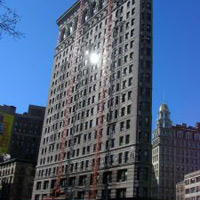 UNION SQUARE, FLATIRON DISTRICT – Wander through produce, flowers, herbs and homemade treats brought in by regional farmers in the bountiful Union Square Greenmarket, a “must do” New York experience. Lunch on the freshest ingredients, purchased from the market at Union Square Café; walk through leafy Madison Square. Take photos of the unusual Flatiron Building; experience the lifestyle of 19th century privileged New Yorkers in the Theodore Roosevelt Birthplace, where presidential memorabilia is also on display; see the art displayed in the National Arts Club, housed in a Gothic Revival brownstone.
CHELSEA & the MEATPACKING DISTRICT – Chelsea is the center of New York’s art world - where the work of the hottest, the most globally acclaimed, and the emerging artists are displayed in over 200 galleries in spacious former industrial buildings. It’s where established artists congregate, art students gather like groupies, gallerists scour for that “must have” piece, and tourists on gallery walks take it all in. The funky Chelsea Hotel, built in 1883 as the co-op apartment home of literary giants, attracts the artsy crowd. Enjoy Off-Broadway in the Atlantic Theater, once an old church, and wonderful modern dance in the Art Deco Joyce Theater.
After exhaustive gallery gazing, refuel in Chelsea Market, grand indoor space with the biggest collection of gourmet food retailers in the city. Spend time along the Hudson River at Chelsea Piers, a 30 acre sports and entertainment complex – the sports choices are amazing, and harbor cruises depart from the piers once used by plush ocean liners. Walk the floors of the Chelsea Antiques Building, where dealers in permanent stalls run the gamut, or on weekends, browse the outdoor Annex Antiques Fair and Flea Market. In the adjacent MEATPACKING DISTRICT, officially Gansevoort Market, apron-wearing butchers working for meat-cutting wholesalers co-exist with Manolo wearing fashionistas. Designer boutiques line 14th Street, and the district comes alive at night in the hippest of restaurants and in trendy clubs frequented by party people.
MIDTOWN
In the minds of many, Midtown is the Big Apple. It has it all – skyscrapers, theaters, fabulous stores, museums – all concentrated between 39 th and 59 th streets. Midtown encompasses the Garment District, the Theatre District, the Diamond District. It’s the bright lights and 24-hour action of Times Square, the excitement of Broadway shows, the events on Rockefeller Plaza, the diplomatic buzz at the United Nations. It’s where New York City’s grand landmarks, the spired Art Deco Empire State Building and Chrysler Building, the gilded and grand Beaux Arts Grand Central Station and New York Public Library, St. Patrick’s Cathedral, beautifully Gothic, and the Museum of Modern Art, contemporary inside and out, punctuate the skyline. Fifth Avenue is New York’s “ Main Street,” totally synonymous with shopping on a grand scale – Tiffany’s, Bergdorf’s, Bendel’s, Macys, Saks, and every designer boutique imaginable. It is here that the biggest concentration of hotels is clustered, and restaurants, from fancy to family, cater to every taste.
UPTOWN
The Upper East Side and Upper West Side, divided by the grand swath of green Central Park, are the most gentrified part of the city, where avenues seem broader and tree canopies are an integral part of the urbanscape. While both sides are prime residential areas, there is a difference in tempo, a difference in attitude, between the two. The Upper East Side is “old money” – more conservative, proper, more associated with business interests. The Upper West Side is “upscale hip” – more liberal, colorful, more associated with the arts. Harlem, America’s best known African-American neighborhood, lies just north of Central Park.
UPPER EAST SIDE – The posh Upper East Side, sometimes referred to as the “Silk Stocking District” for the privileged lifestyle of the super wealthy industrialists of the late 1800s who built fabulously grand residences, many in the decoratively ornate Beaux Arts style, is a visual treat. The city’s notables live in luxurious apartments lining Fifth and Park avenues, with spectacular views of Central Park, and in grand villas on bluffs along the East River. Gracie Mansion, official home of New York mayors, sits on such a bluff. Madison Avenue is the address of boutiques of the world’s top designers, some housed in museum-like settings of architectural masterpieces. Museum Mile, a stretch of Fifth Avenue along Central Park, is lined with the best museums in the world – the Metropolitan Museum of Art, the Guggenheim, the Frick, the Whitney. Restaurants with multiple stars and impeccable service, and the most elegant hotels are situated here.
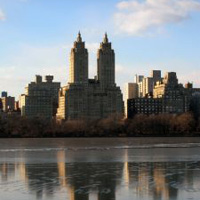 UPPER WEST SIDE – On the Upper West Side, handsome 19th century brownstone townhouses and notable apartment buildings, many featured in popular TV sitcoms, are sought after by hipsters, celebrities, and middle class yuppies. Performing arts reign at Lincoln Center and the huge American Museum of Natural History is filled with awesome natural wonders. Jazz at Lincoln Center in the Time Warner Center on Columbus Circle features jazz bests; relaxed jams happen nightly in Dizzy’s Jazz Club. Shops at Columbus Circle offers upscale shopping, restaurants and entertainment with a Central Park view. Small bars along Amsterdam Avenue are neighborhood favorites, as are eclectic, small shops lining Columbus Avenue, finds in the Sunday Green Flea Market, hot dogs from Gray’s Papaya, bagels from H&H, and gourmet delicacies from Zabar’s. For a change of pace, stroll through Riverside Park or visit the world’s largest Gothic cathedral, the Cathedral of St. John the Divine in Morningside Heights.
HARLEM – America’s best known African-American community, long a center of black culture, business and politics, is newly revitalized and energized. The “first” Renaissance between 1920 and 1930 was a time of unprecedented creative activity among African-Americans, embracing all art forms. Jazz took root, becoming the new rage, and jazz clubs were hot places to be seen. The Cotton Club, the Lennox Lounge, the Savoy Ballroom, the Apollo Theater became legendary. After decades of hard times, marginalization and economic hardship, Harlem is experiencing a “second” Renaissance. With funding, big name backing and high profile tenants, stores, movie theaters and offices have taken root on 125th Street, the economic heart of the neighborhood. Harlem on Sunday Tour with Brunch, combining a tour of the area, a rousing Gospel music experience in a local church, and wonderful soul food in a local restaurant, is a great way to get a feel for the sights, spirit and soul of the neighborhood. Or, to experience the jazz scene, enjoy jazz in Harlem on a Harlem Soul Food and Jazz Tour.

Trust us, we've been there!
www.trustedtours.com